
The enemies of colour
Colour is attacked from three directions: light (fading), rubbing (crocking) and washing / perspiration (bleeding and transfer). Each has its own test and scale.
The three tests buyers should request
- Lightfastness — measured on the Blue Wool scale 1–8 (8 = best). Indoor upholstery should be 4–5; outdoor products need 6–7+.
- Crocking (rubbing fastness) — dry and wet, graded 1–5. Wet crocking below 3 means colour transfer onto light clothing — a fast path to returns.
- Wash / perspiration fastness — graded 1–5 for staining and shade change; critical for removable covers and apparel-adjacent products.
Solution-dyed: the unfair advantage
With solution-dyed yarn, pigment is added to the polymer before extrusion, so colour is present in the fibre core. Compared to piece-dyed fabric, solution-dyed cloth offers:
- Dramatically higher lightfastness (little or no fading over years).
- Better crocking — pigment cannot be "rubbed off" the surface.
- Consistent shade across production lots.
How to specify
- State minimum fastness grades in your technical spec sheet.
- Request lab reports from an accredited third party, not only the mill.
- For outdoor and marine lines, make solution-dyed yarn mandatory.
Fastness grades are the difference between a brand people reorder and a brand people return.
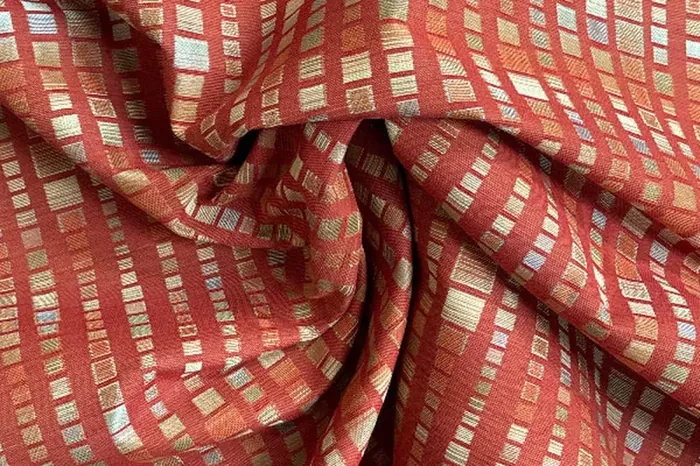
Colour that survives the sun sells twice.
— KCK.Fabric Trade Team
Comments (3)
“Exactly the breakdown we needed before committing to a private-label run.”
“We switched to compressed models last season and warehouse cost dropped noticeably.”
“Quality held up well after unboxing. Foam recovery was faster than expected.”